Architecture Overview
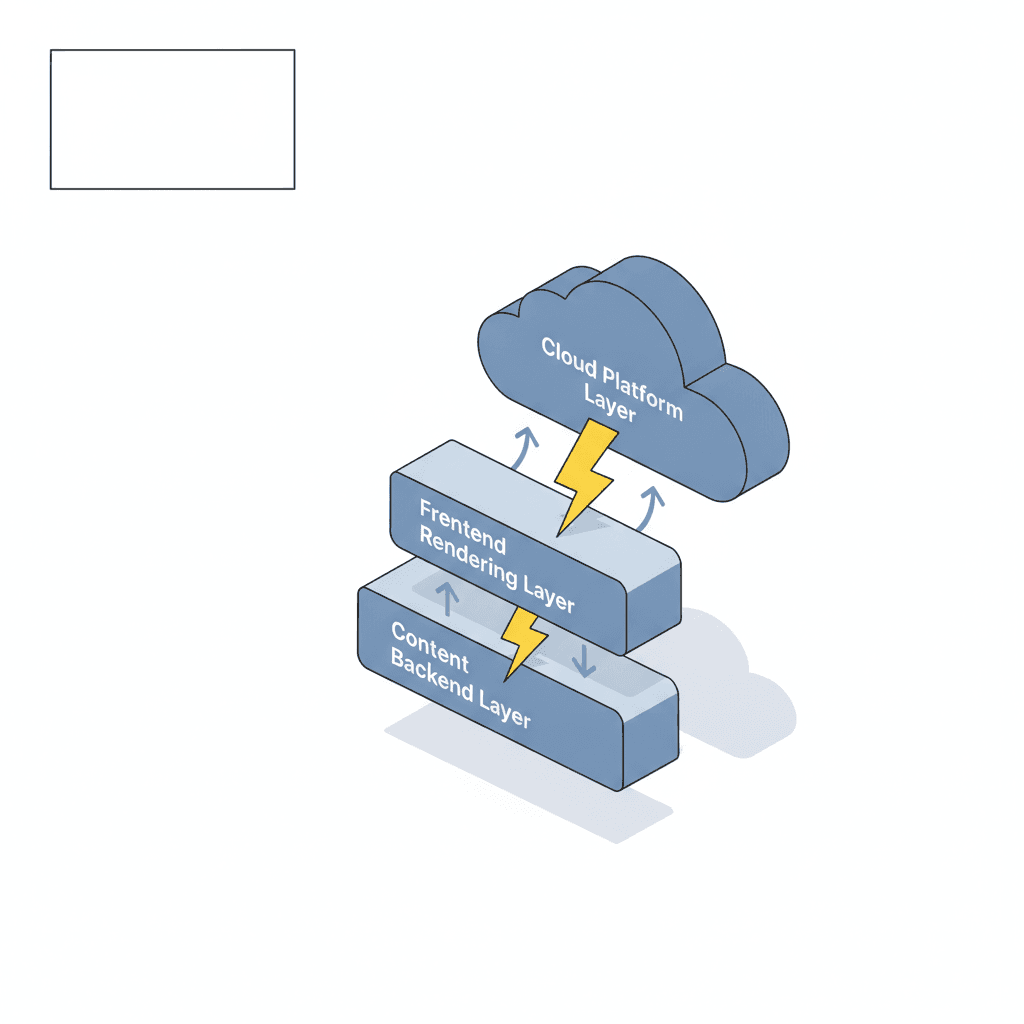
This demo is a decoupled (headless) architecture in three layers — a WordPress content backend, a Next.js frontend, and the Pantheon platform that runs both. Content flows in one direction: editors work in WordPress, the frontend consumes a read-only API, and the edge serves the result.
1. WordPress — the content backend
- Content model: Page, Article (native post), and Event content types (body, featured image, tags, and event date / location / virtual fields via ACF) plus a Tags taxonomy.
- REST API: WordPress exposes content under
/wp-json/wp/v2; the frontend fetches collections and single items with embedded media and terms. ACF fields appear under anacfkey on events. - Anonymous reads: published content is readable without authentication, so the frontend needs no credentials for public pages.
- Content model as code: the
eventpost type and its ACF fields are registered in a must-use plugin, and the demo content is seeded with WP-CLI — not clicked together by hand.
2. Next.js 16 — the frontend
The App Router maps routes to WordPress content:
| Route | Renders |
|---|---|
/ |
Homepage — hero, featured & latest posts, events |
/blog, /blog/[slug] |
Article list & detail |
/events, /events/[slug] |
Event list & detail |
/tags, /tags/[tag] |
Taxonomy browse |
/[...slug] |
WordPress pages, by slug |
- Data layer: a typed fetch + transform layer normalizes REST responses into clean frontend objects (images, tags, dates).
- API routes:
/api/revalidatereceives publish webhooks and/api/healthreports backend connectivity. - Images:
next/imageoptimizes media served from WordPress uploads.
3. Pantheon — the WebOps platform
- One workflow: a single Git workflow and the Terminus CLI manage CMS and frontend together; the GitHub App builds and deploys.
- Multidev: every pull request spins up a live preview environment.
- Dev → Test → Live environments with review checkpoints.
- Container runtime on Google Cloud Run, fronted by the Global CDN.
Caching strategy
Performance in a decoupled stack comes from caching at several layers, so most visitor requests are served from the edge and never reach WordPress. The trade-off is freshness — each layer needs a reliable way to update when content changes.
| Layer | What it caches | How it stays fresh |
|---|---|---|
| Pantheon Global CDN (edge) | Rendered HTML and static assets, served worldwide | Cache-Control / s-maxage TTLs, plus targeted purges |
| Next.js route & data cache | Statically generated / ISR pages and fetched data | Time-based and on-demand revalidation |
| WordPress (Advanced Page Cache) | REST API responses from WordPress | Surrogate-Key purge when related content changes |
Keeping the frontend in sync
When an editor publishes or updates content, a WordPress webhook (a must-use plugin) POSTs the affected surrogate keys to the frontend’s /api/revalidate route. Next.js then revalidates only the cache tags for the pages that changed — so publishing rebuilds just those pages instead of the whole site. The keys (post-*, page-*, event-*, term-*) match the cache tags the frontend attaches when it fetches.
Content flow
- An editor publishes or updates content in WordPress.
- WordPress exposes it over the REST API and fires the revalidation webhook for the affected keys.
- Next.js revalidates only those cache tags; the next request rebuilds those pages.
- Visitor requests hit the Global CDN first, so most traffic never touches the application or WordPress.
References: Decoupled guides · Next.js on Pantheon docs · Decoupled CMS. New here? Start with Getting Started or read About This Demo.